 020 3282 7605
 info@karsonsconsulting.com
At 90 High Holborn, the client’s objective was to improve the EPC performance of a central London office building (22,240 m²), targeting an A rating.
A wider programme of works is due to commence, including the installation of air source heat pumps. However, it was recognised early on that this alone would not be sufficient. The EPC position needed to be considered in the context of the whole building. Karsons was therefore asked to assess the building and provide a clear, technically sound basis for improving its EPC outcome.
The existing EPC rating was B49, produced using Level 4 SBEM modelling. At this stage, both the type of building and the assessment method become important. EPC methodology distinguishes between building complexity and assessment level:
more complex buildings require more advanced assessment methods,
assessors are limited to buildings within their competency level,
SBEM (Level 3 and 4) applies a simplified approach to performance..
Although the building is large, it is not highly complex in EPC terms. It does not include features such as a central atrium or complex façade ventilation, so it can reasonably be classified as a Level 4 building. The original assessment therefore aligned with the building classification, but not with the level of detail needed to fully understand its performance.
Where a building already performs reasonably well, the challenge is different. The question becomes how much further it can improve, and how that improvement can be demonstrated with confidence.
To address this, Karsons undertook a Level 5 EPC assessment.
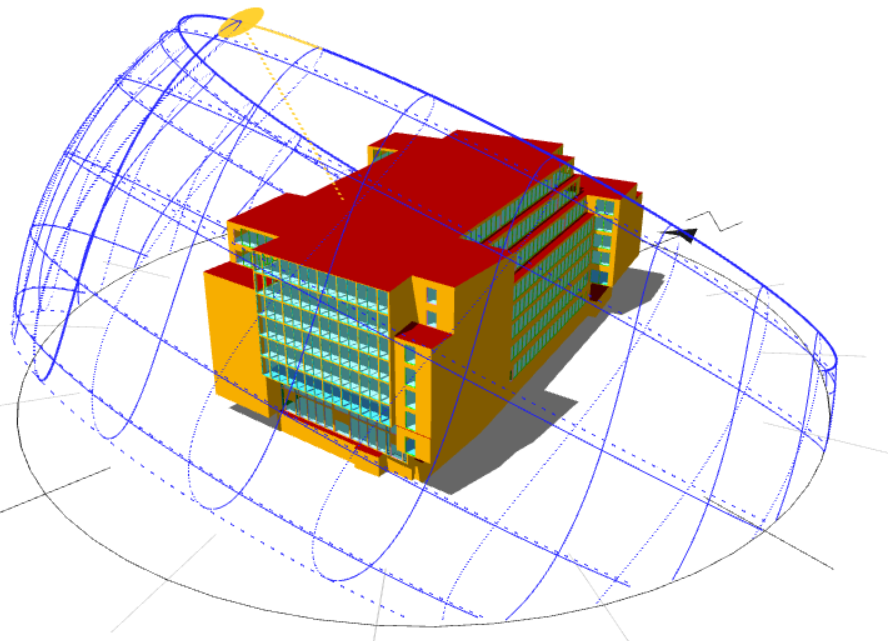
A dynamic simulation model was developed using Tas. This moves beyond SBEM, using a full 3D thermal model and hourly weather data to represent how the building performs over time.
The purpose was to understand:
performance of the existing systems
the impact of proposed upgrades, including heat pumps
whether additional measures would be required to achieve an A rating
This level of modelling is typically more appropriate for buildings of this scale, where simplified methods can limit the accuracy of the result.
For a building of this size, EPC performance is tied to how the asset is managed and positioned.
At 90 High Holborn, the assessment provides:
a clear link between proposed upgrades and EPC performance
confidence that an A rating is achievable
a defined route for additional measures, if required
Where the result sits close to the threshold, the available roof area offers a clear contingency. Photovoltaic panels provide a straightforward route to securing an A rating if needed.
Rather than treating the EPC as an isolated output, the focus was on understanding the building, selecting the appropriate level of modelling, and linking the result back to the client’s objective.
This reflects how Karsons approaches EPC work: aligning the method to the building, and the outcome to the decisions that need to be made.
Karsons Consulting are members of the Chartered Institute of Building Services Engineers, The Association of Consultancy and Engineering, British Institute of Facilities Managers and the Building Services Research and Information Association.

